
Intro
You may also enjoy:
Minerals can be collected in many natural environments, but locations vary depending on geology and legal access. Understanding where minerals are commonly found helps beginners choose appropriate and permitted collecting sites.
• Found in diverse natural settings
• Depends on local geology
• Must follow legal guidelines
Riverbeds and Streams
Flowing water exposes mineral material.
• Erosion reveals rocks and crystals
• Surface collecting is often possible
• Check local regulations before collecting
Riverbeds are common beginner locations.
Beaches
Beaches may contain mineral-rich sand and stones.
• Wave action exposes materials
• Surface collecting is common
• Often suitable for beginners
Always confirm local collecting rules.
Mountains and Rock Outcrops
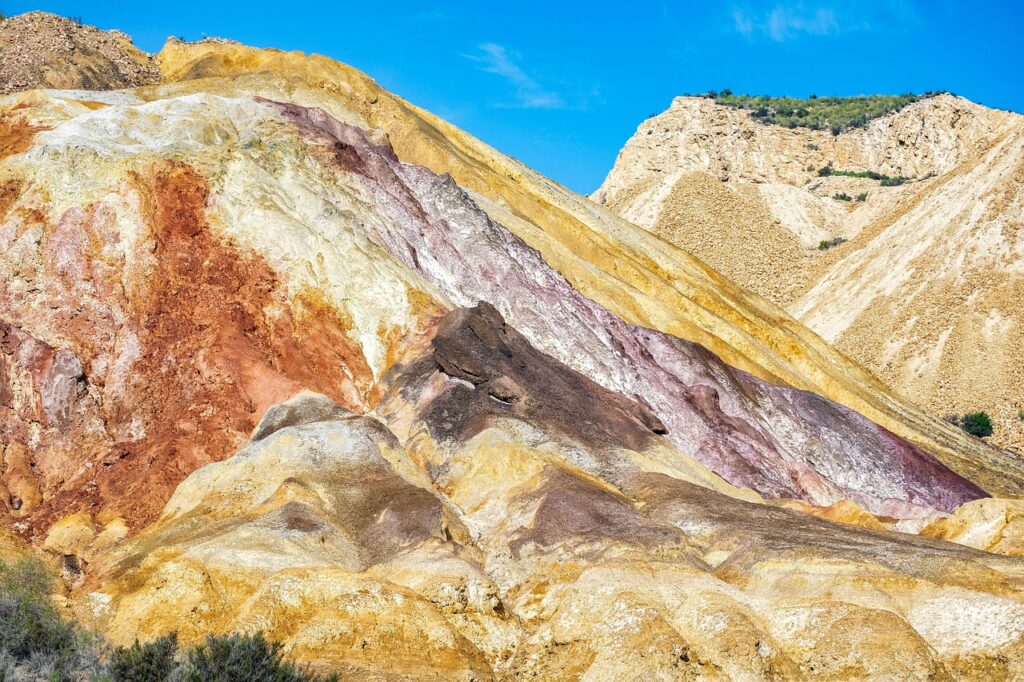
Exposed rock formations may contain mineral veins.
• Igneous and metamorphic rocks
• Crystal pockets and fractures
• Requires careful tool use
Safety precautions are important in these areas.
Abandoned Mines (With Permission)
Some old mining sites allow limited collecting.
• Often contain exposed mineral deposits
• May require permission
• Can present safety hazards
Research and caution are necessary.
Designated Collecting Sites
Some locations are open specifically for mineral collecting.
• Pay-to-dig sites
• Public rockhounding areas
• Mineral parks
These are often beginner-friendly options.
Your Local Area
Even nearby areas may yield minerals.
• Road cuts (where permitted)
• Construction spoil piles (with permission)
• Natural exposures
Local geology determines what can be found.
Why Research Matters
Studying maps and guides helps collectors:
• Identify mineral-rich regions
• Avoid restricted areas
• Improve chances of finding specimens
Preparation increases success.
Conclusion
Minerals can be collected in a variety of natural environments, provided collectors follow legal and safety guidelines. Researching local geology and regulations ensures responsible and successful collecting.
You might enjoy: