Intro
You may also enjoy:
Crystal systems describe the geometric shape and internal structure of minerals. All minerals form in one of several crystal systems based on how their atoms are arranged. Understanding crystal systems helps explain why minerals grow into specific shapes.
• Based on atomic arrangement
• Determines crystal shape
• Useful for mineral identification
Why Crystal Systems Matter
The way atoms are arranged inside a mineral determines:
• The shape of crystals
• Cleavage patterns
• Symmetry
Even if crystals are not visible, the internal structure still exists.
The Seven Crystal Systems
Minerals are grouped into seven main crystal systems:
• Cubic
• Tetragonal
• Orthorhombic
• Hexagonal
• Trigonal
• Monoclinic
• Triclinic
Each system has different symmetry and axis lengths.
Cubic System
Crystals form in cube-like shapes.
• Equal axes
• 90° angles
• High symmetry
Examples include halite and pyrite.
Hexagonal System
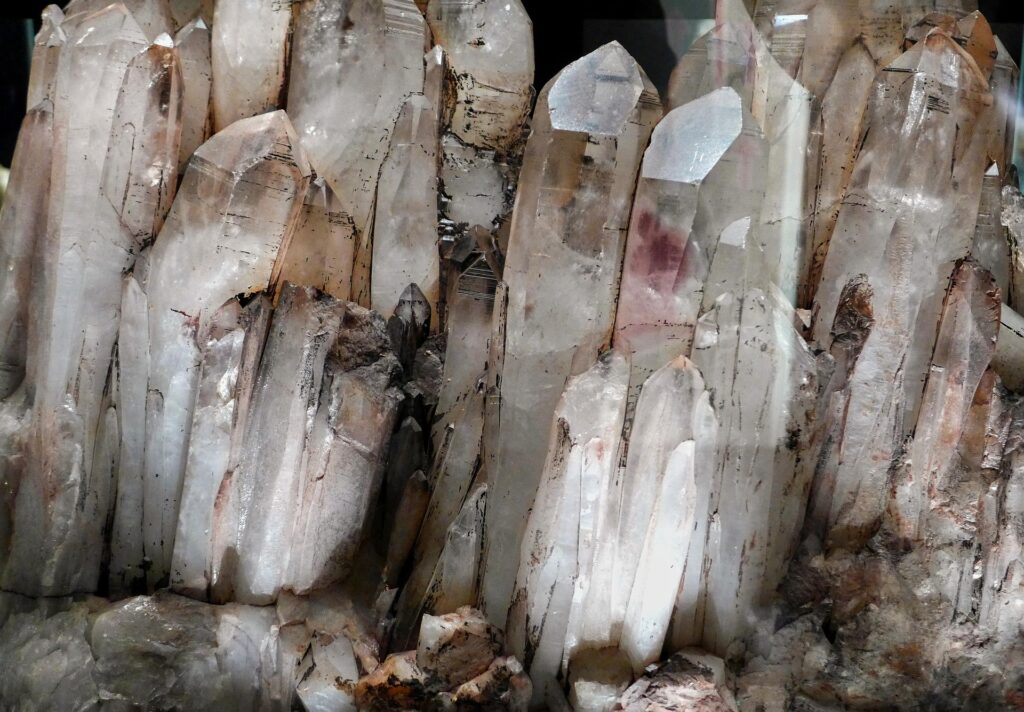
Crystals often form six-sided shapes.
• Four axes
• 120° angles in one plane
• Common in quartz
Quartz is a well-known example.
Tetragonal and Orthorhombic
These systems produce rectangular or elongated crystals.
• Tetragonal: two equal axes
• Orthorhombic: three unequal axes
• 90° angles
Monoclinic and Triclinic
These systems have less symmetry.
• Unequal axes
• Angles not all 90°
• Often produce less symmetrical crystals
Many complex minerals fall into these systems.
How Beginners Use Crystal Systems
Beginners may not memorize all systems, but recognizing:
• Cubes
• Six-sided prisms
• Needle-like crystals
can help narrow identification.
Conclusion
Crystal systems describe how minerals are structured at the atomic level, which determines their external shape. Recognizing basic crystal forms helps improve mineral identification skills.
You might enjoy: