
Intro
You may also enjoy:
Luster describes how a mineral reflects light from its surface. It is one of the first properties used in mineral identification and helps distinguish between different types of specimens.
• Describes surface reflection
• Helps narrow identification quickly
• Often visible without tools
Metallic Luster
Minerals with metallic luster look like polished metal.
• Shiny and reflective
• Often opaque
• May resemble steel or silver
Examples include pyrite and galena.
Nonmetallic Luster
Most minerals have nonmetallic luster.
Common types include:
• Vitreous (glassy)
• Pearly
• Silky
• Dull or earthy
• Resinous
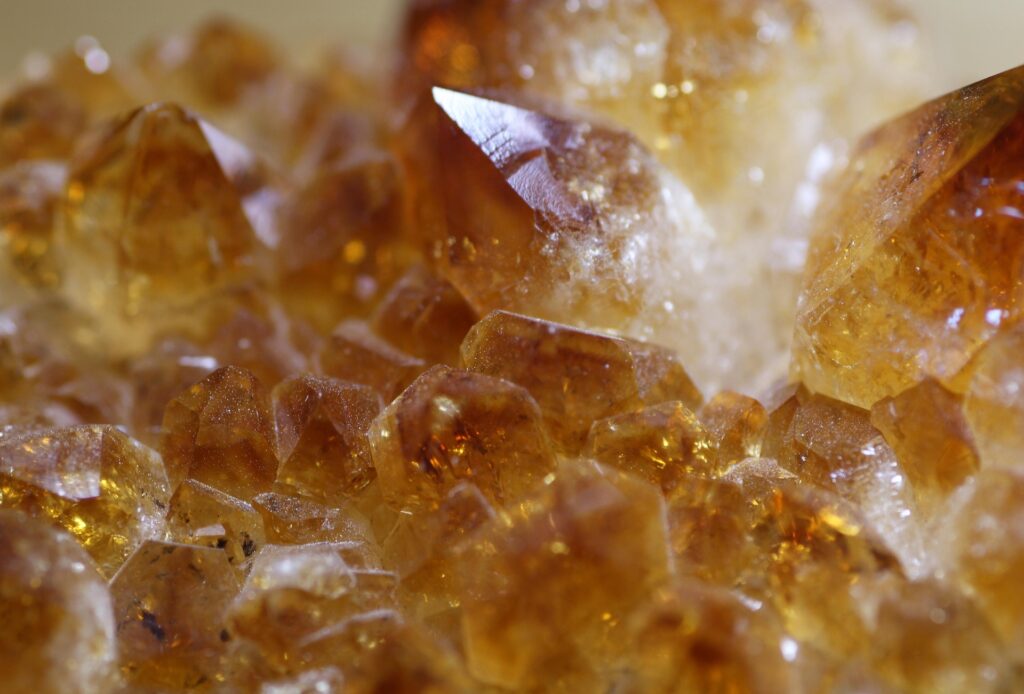
Quartz is an example of vitreous luster.
Vitreous (Glassy)
A glass-like shine.
• Clear or translucent appearance
• Reflects light sharply
• Common in quartz
Pearly
Soft glow resembling pearls.
• Often seen on cleavage surfaces
• Subtle reflection
• Common in some feldspars
Silky
Fine, fibrous shine.
• Appears soft and glowing
• Often found in fibrous minerals
• Common in satin spar gypsum
Dull or Earthy
Little to no shine.
• Rough surface
• Light not strongly reflected
• Common in clay-rich minerals
Why Luster Matters
Luster helps identify mineral categories.
For example:
• Metallic luster often indicates metal-rich minerals
• Glassy luster is common in silicates
Combined with other properties, luster improves accuracy.
Conclusion
Mineral luster describes how a specimen reflects light and is an important identification clue. Observing surface shine helps narrow possibilities when identifying minerals.
You might enjoy: